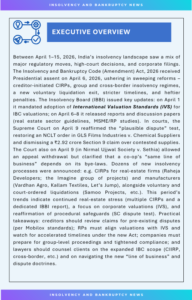
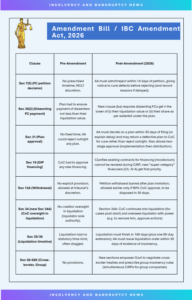
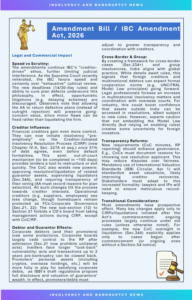
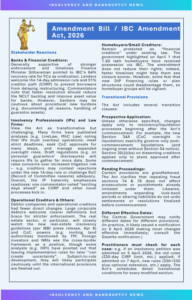
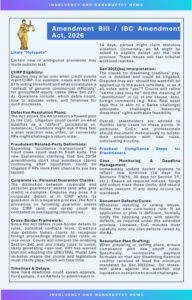
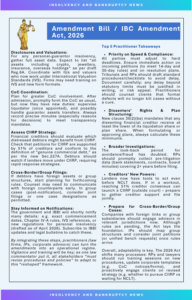
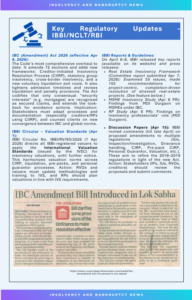
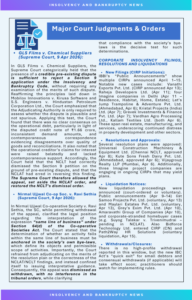
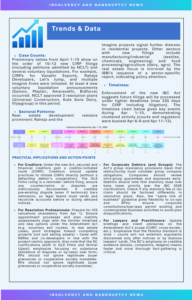
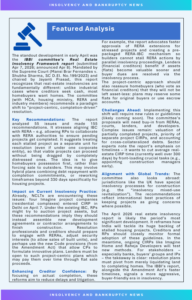
The latest special edition of the AIPE Newsletter (1st–15th April 2026) captures a pivotal moment in India’s insolvency regime, marked by the enactment of the Insolvency and Bankruptcy Code (Amendment) Act, 2026.
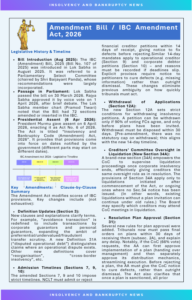
Receiving Presidential assent on 6th April 2026, the amendment introduces a wide-ranging recalibration of the IBC framework—significantly strengthening creditor control, accelerating timelines, and expanding the scope of insolvency proceedings.
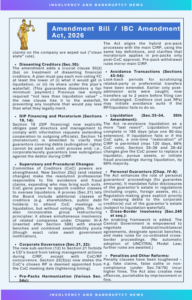
Among its most notable features are the introduction of group insolvency and cross-border frameworks, a creditor-driven CIRP approach, and strict statutory timelines for admission and resolution. The amendment further enhances procedural discipline by mandating quicker decision-making by adjudicating authorities and introducing structured opportunities to cure defects rather than outright rejection.
A particularly significant shift lies in the treatment of dissenting financial creditors, ensuring a minimum payout linked not only to liquidation value but also to their entitlement under the resolution waterfall—thereby closing long-debated interpretational gaps.
The legislation also deepens the role of the Committee of Creditors, extending its oversight into liquidation proceedings, while simultaneously reinforcing accountability through enhanced penalties and expanded avoidance transaction provisions.
From a practical standpoint, insolvency professionals, financial institutions, and corporate stakeholders must now adapt to:
- compressed timelines and procedural rigor,
- increased scrutiny of transactions (including extended look-back periods),
- evolving jurisprudence on disputes and fraud classification, and
- the emerging architecture of group and cross-border insolvency.
As reflected in recent Supreme Court pronouncements and regulatory updates, the direction is clear—speed, certainty, and creditor primacy will define the next phase of India’s insolvency ecosystem.
📩 Read the full newsletter to explore clause-by-clause insights and practical implications.