The latest edition of the AIPE Newsletter brings a comprehensive overview of key developments shaping India’s insolvency and restructuring landscape during the second half of March 2026.
This period marks a defining phase in the evolution of the Insolvency and Bankruptcy Code (IBC), driven by the passage of the IBC (Amendment) Bill, 2025 and a broader policy shift toward outcome-driven resolution, creditor empowerment, and institutional accountability.
Executive Overview
The insolvency ecosystem continues to mature with increasing emphasis on:
- Speed and efficiency in resolution timelines
- Strengthened compliance and regulatory discipline
- Reinforcement of foundational principles such as:
- Clean slate doctrine
- Primacy of CoC’s commercial wisdom
- Limited judicial interference
Key Highlights
1. Legislative & Policy Developments
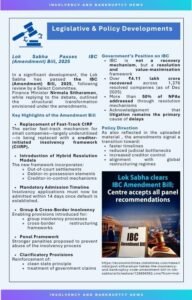
- Introduction of Creditor-Initiated Insolvency Resolution Process (CIIRP)
- Hybrid resolution models combining creditor-in-control and debtor-in-possession frameworks
- Mandatory admission timelines (14 days)
- Enabling provisions for group and cross-border insolvency
- Strengthened penal framework to prevent misuse
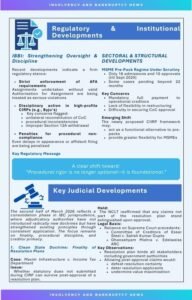
2. Judicial Developments
- Reinforcement of clean slate doctrine ensuring finality of resolution plans
- Clarification on irreversibility of liquidation
- Recognition of pre-CoC settlement window
- Affirmation that default triggers insolvency, not dispute over quantum
- Continued emphasis on CoC’s commercial wisdom with limited judicial review
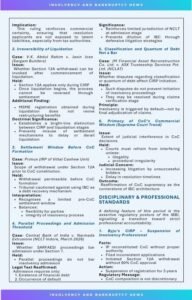
3. Regulatory & Institutional Trends
- Stronger enforcement actions by IBBI
- Increased scrutiny on procedural compliance and AFA requirements
- Disciplinary actions highlighting the importance of transparency and accountability
4. Sectoral Insights
- MSME pre-pack framework facing practical challenges
- Emerging shift toward CIIRP as a more flexible alternative
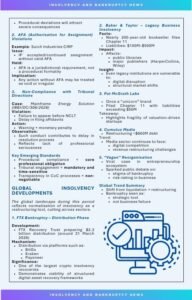
5. Global Insolvency Developments
- Large-scale restructuring cases including FTX distribution phase
- Rise in Chapter 11 filings across legacy and startup sectors
- Global trend: Shift from liquidation to restructuring as a strategic tool
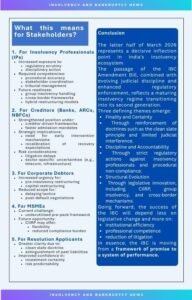
What This Means for Stakeholders
- Insolvency Professionals: Increased regulatory scrutiny and need for procedural precision
- Creditors: Greater control with faster admission processes
- Corporate Debtors: Reduced scope for delay; increased need for early restructuring
- Resolution Applicants: Improved certainty through extinguishment of past liabilities
Conclusion
The developments during this period reflect a clear transition of the IBC framework into its second-generation phase, characterized by:
- Finality and certainty in resolution
- Discipline and accountability in processes
- Structural evolution through legislative and regulatory innovation
The focus now shifts from legislative reform to institutional efficiency and professional competence, ensuring that the insolvency framework delivers consistent and credible outcomes.
Read the Full Newsletter
Access the complete edition attached below.