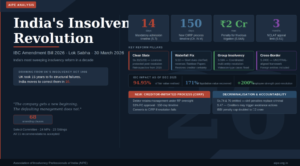
In 2018, as Head of the Insolvency Division at SBI, my bank waited patiently for 730 days for a resolution of Essar Steel that was legally due in 270. We have yet to see any signs of relief. India’s IBC Amendment Bill 2026 aims to bridge the gap between legislative intent and ground reality.
On 30 March 2026, the Lok Sabha passed the most comprehensive overhaul of India’s insolvency framework in a decade. 68 amending clauses. A new creditor-initiated process. Mandatory 14-day admission. A codified Clean Slate. Statutory timelines at every stage.
But to understand why each of these provisions was necessary, you have to go back—not just to India’s own decade of IBC experience, but to Britain’s Insolvency Act of 1986 and the structural failures that plagued it for fifteen years.
The parallels are striking. Cultural resistance to rescue. Promoter gaming of timelines. Uncertainty over licenses and the distribution waterfall. A judiciary overwhelmed by caseload.
However, India has moved faster than the UK did. The question now is whether our institutions—the NCLT benches, the IPs and IPEs, and the rule-making machinery, i.e., the MCA and IBBI—can keep pace with the legislation.
As CEO of AIPE, I have written a detailed analysis drawing on the Amendment Bill, the Select Committee’s recommendations, and the lessons of comparative insolvency history.
Key themes covered:
→ Why the 14-day admission mandate overturns Vidarbha Industries
→ The CIIRP — India’s answer to pre-distress intervention
→ The Clean Slate principle and what it means for resolution applicants
→ The Section 53 waterfall fix and the Rainbow Papers correction
→ What the Bill still does not address — and why that matters
The full article is linked below. I would welcome your thoughts—particularly from fellow insolvency professionals, IPEs, lenders, Insolvency Lawyers and policy practitioners.
Read full version here – Linkedin @aipei_n
#IBC #InsolvencyLaw #CorporateRestructuring #AIPE #IBCAmendment2026 #InsolvencyProfessionals #NCLT #CorporateGovernance